
Why learn Esperanto in Cowdenbeath in 1915?
While the war put an end to plans for an Esperanto congress in Edinburgh, a group in Cowdenbeath took up the language.
July 1915
The town’s anarchist group wanted to exchange letters with people abroad who shared their politics. R. Selkirk explained the plan in the July 1915 issue of Freedom.
Read Selkirk’s letterIn July 1915 the anarchist paper Freedom carried a report from Cowdenbeath signed R. Selkirk. Members of the town’s anarchist group were learning Esperanto so they could write to groups abroad who shared their politics. On the next page, readers could order a pamphlet called Anarchists and Esperanto for a penny.
A Sunday in the coalfield
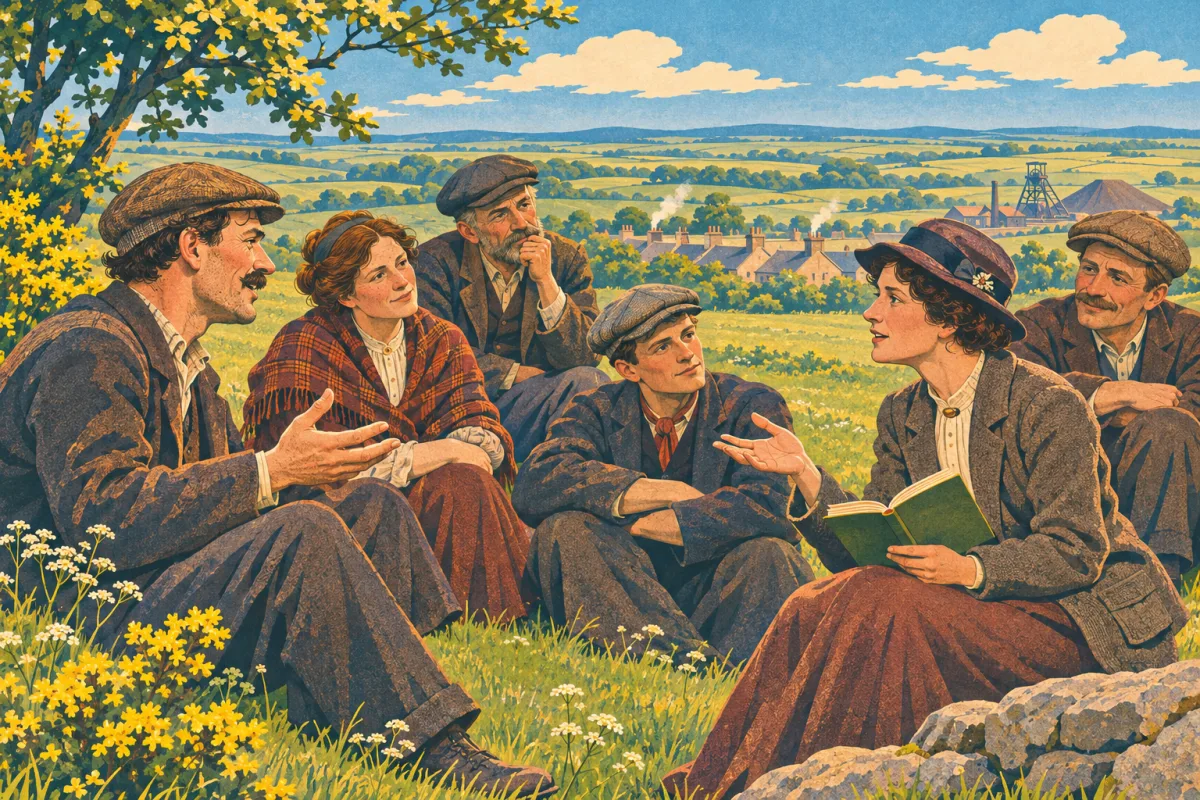
On Sundays the group held open-air discussions. One member chose a subject to start things off and anyone in the crowd could join in. Selkirk put the attendance at some meetings outside the smaller mining villages at more than a hundred.
The first Monday in June was a day off in the district. Miners usually held a demonstration to mark the winning of the eight-hour day. When the leaders called it off in 1915, the Cowdenbeath group arranged a motor trip to Crieff. One detail of the outing made it into Selkirk’s report. Whenever anyone wanted to change the plan, everyone had a say and the party came to an agreement.
Postcards from abroad
Other Scots were already using Esperanto to exchange news. Around 1908 John Beveridge in Dundee was getting postcards from pen friends as far away as Harmanli in Bulgaria. Edinburgh had been chosen to host the world Esperanto congress in 1915, the year Selkirk wrote from Cowdenbeath. The war put a stop to the gathering. Edinburgh eventually welcomed the congress in 1926.