
Why did Cowdenbeath’s milk shortage reach Parliament?
Cowdenbeath Co-op had 5,000 members to supply. A week before Christmas, the town’s MP asked what had happened to the milk.
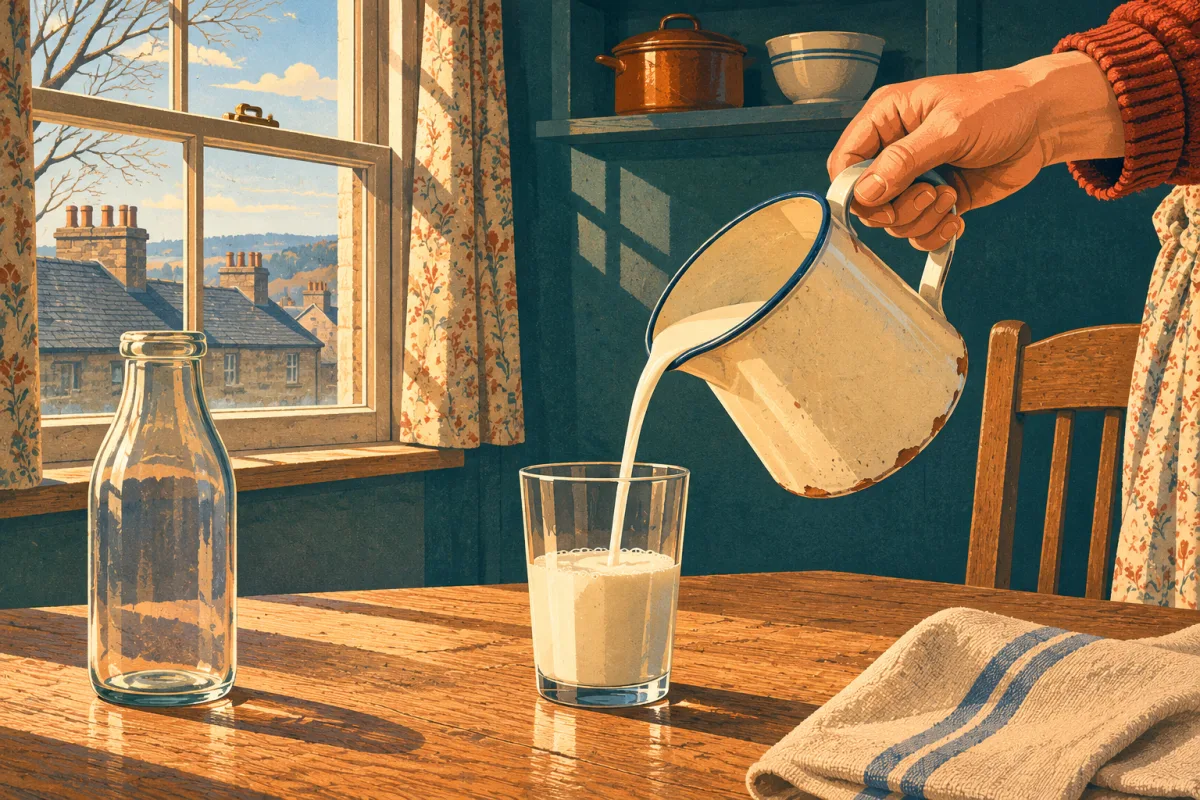
December 1940
West Fife MP Willie Gallacher said Cowdenbeath had been told to expect a 10 per cent cut but was getting 30 to 40 per cent less milk. The Ministry of Food said the shortage had been brief and the town’s Co-op was now being offered more than it needed.
Read the question and written replyA week before Christmas 1940, Willie Gallacher, the MP for West Fife, asked the Ministry of Food to get more milk to Cowdenbeath. The Co-operative Society had 5,000 members to supply. A cut of 10 per cent had been announced, Gallacher said, but the society was getting between 30 and 40 per cent less milk. He wanted the shortfall made good at once.
Where did the milk come from?
Major Gwilym Lloyd George gave his written answer on 18 December. He had traced the milk to Dunfermline Co-operative Society. For a short time, he acknowledged, Cowdenbeath had received too little. By the time he replied, he said, the town’s Co-op was being offered more than it needed.
Cowdenbeath’s own Co-op had begun as a branch of Dunfermline’s. In 1875 local people took over the branch to open an independent store. William Davidson became its first president and Alexander Birrell its first salesman. When the society outgrew the shop, it put up new premises across the street. Provost Henry Mungall opened them in 1892.
In November 1941 Gallacher took up the same question for Markinch Co-op. By then, dairymen had to set milk aside for mothers, children and sick people first. Other adults could get up to two pints a week. Lloyd George acknowledged that some Scottish dairymen had too little milk to supply even that much.